Eleven years ago I published my first book, Heaven Is a Place on Earth. It didn’t move the needle quite as much as N. T. Wright’s, Surprised by Hope, which came out four years later, but it seemed to make some impact in the evangelical world and brought renewed interest in Belinda Carlisle. I proudly stand behind that book, though there are two things I would have done differently if I were writing it today.
1. I would have made it funnier and easier to understand. I intentionally kept my personality out of it because I was writing a book. When it was done my editor asked why I didn’t inject more of myself into the manuscript. I said I didn’t think I was supposed to. I went back and inserted a few things, but the book still sounds a bit like I was writing for the approval of my academic peers. Because I was. Three things happened as I honed this material in seminary classes and churches over the past decade. I learned many new insights, discovered better ways to communicate them, and no longer cared what the academics thought. We need more people who can write sound theology for the church, and I decided to do my part. My goal from now on is to put as many cookies as I can on the lowest shelf, without sacrificing content.
2. I would have said much more about redemption. This wasn’t the aim of Heaven Is a Place on Earth, which is essentially a theology of creation. I didn’t say much about the gospel then because it wasn’t in dispute. We all knew what it was. That changed with the rise of the emergent church, many of whom loved Heaven but hated my response to their movement, Don’t Stop Believing. I had offended the Platonic right with my first book and the left with my second. This was going well.
When I asked Zondervan for another bite of the apple, my editor, Ryan Pazdur, suggested a twist that turned my idea into something special. Best-selling authors such as David Platt, John Piper, and Francis Chan rightly encourage us to sacrifice everything for the sake of the gospel. Fair enough. But what does this mean for a normal Christian life? How do we integrate creation and redemption, humanity and Christianity, earthly pleasure and heavenly purpose? Can we raise the bar without saddling Christians with false guilt? How do we call for radical sacrifice without falling into a new legalism? What about the question everyone asks but almost never out loud, “Won’t following Jesus ruin my fun?”
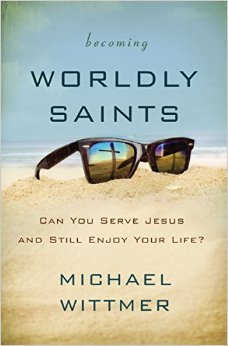
Those questions are answered today. I’m excited to announce the release of Becoming Worldly Saints: Can You Serve Jesus and Still Enjoy Your Life?, the fitting sequel to Heaven Is a Place on Earth. Twenty years in the making, field tested in churches and classrooms, this book is the culmination of what I’ve learned so far. It is deep enough to be used in colleges and seminaries, yet funny enough and explained simply enough so anyone can follow along. If you can read, you can understand this book. If you are in ministry, you will learn from it. In either case, you will enjoy it.
Becoming Worldly Saints celebrates the earthiness of the Christian faith, the centrality of calling, and the priority of redemption. It teaches ordinary Christians how to put the pieces of their lives together, so they know where everything fits and why. And it teaches pastors how to help them do that. Read it, and you’ll understand why it’s not only possible to serve Jesus and still enjoy your life, but it’s the only way you can. May God use it to bless his church.
 Mike Wittmer
Leave a comment